
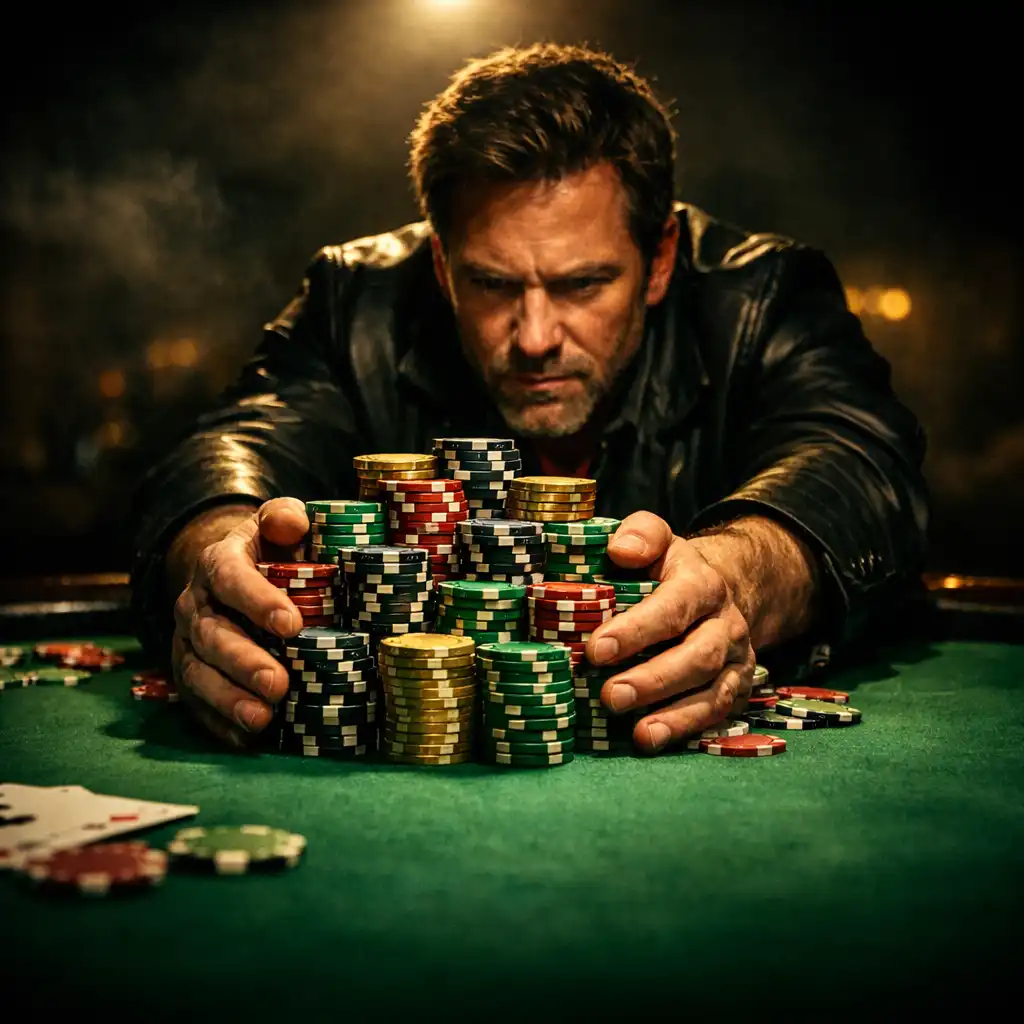
Rounders
A reformed gambler returns to the underground poker world to help a friend, risking the life he has rebuilt.
Screen Portrait Collection
A curated collection of cinema's most compelling poker stories, from high-stakes thrillers to character-driven dramas. The game becomes a stage for deception, nerve, and the quiet cost of a single decision.
Editorial Scope
Poker films are not a formal genre but a thematic cluster where the game serves as a crucible for character, tension, and moral choice. A poker table can compress an entire life into a single hand: the player's past, their fears, their capacity for deception, and their willingness to lose everything in pursuit of a moment. These stories use cards and chips as instruments of psychological warfare, turning quiet glances and calculated silences into dramatic action.
The category includes dramas, thrillers, comedies, and biopics. Some films treat poker as a profession, others as a metaphor for fate or ambition, and still others as a backdrop for intimate human conflict. Screen Portrait focuses on storytelling and cinematic craft, not gambling advice. We treat each film as a cultural artefact, examining how directors use the game to reveal character and build suspense.
Gallery Wall
A staggered gallery of notable poker films, each with a still, title, year, and one-line description. The selection favours films where poker is central to the narrative, not merely a background element.
A reformed gambler returns to the underground poker world to help a friend, risking the life he has rebuilt.

A young Depression-era poker player challenges the established king of the game in a high-stakes showdown.
A former Olympic hopeful runs high-stakes underground poker games for celebrities, business titans, and the Russian mob.
Editorial Notes
John Dahl's 1998 drama treats poker as a language of discipline and self-knowledge. Mike McDermott is not simply a gambler; he is a student of human behaviour who learns that the real stakes are his own integrity. The film's underground clubs are rendered as smoky, intimate arenas where every gesture carries meaning, and the final hand becomes a reckoning with the person he used to be.
Read the full reviewNorman Jewison's 1965 classic frames poker as a generational duel. Steve McQueen's Kid is all instinct and ambition, while Edward G. Robinson's Lancey Howard is a master of patience and psychological control. The film uses the game to explore pride, age, and the limits of raw talent, building to one of cinema's most quietly devastating final hands.
Read the full reviewAaron Sorkin's 2017 biographical drama turns the poker table into a study of power and access. Molly Bloom's games are not about the cards but about who is allowed to sit down and what they reveal when they believe no one is watching. The film's rapid dialogue and shifting timelines mirror the precarious world Bloom builds and eventually must dismantle.
Read the full reviewThematic Exploration
Poker films often explore themes of deception, risk, addiction, and the American Dream, using the game as a metaphor for life's gambles. The table becomes a place where social masks slip and hidden natures surface. A player's decision to call, raise, or fold is rarely only about the cards; it is a statement about who they are and what they are willing to sacrifice.
Deception and bluffing function as narrative devices that reveal the gap between appearance and intention. Risk and consequence drive the central conflicts, forcing characters to confront the possibility of total loss. Addiction and obsession shape character arcs, showing how the pursuit of the next hand can consume relationships, careers, and self-respect.
Browse our full film reviews and plot summaries to uncover the stories behind the stakes.
Browse Film Reviews